Mahjong 4 Friends: Multiplayer
- 4.8
- Rating
- 100.00K
- Installs
- Free
- Price

 Analysis by App-foxy
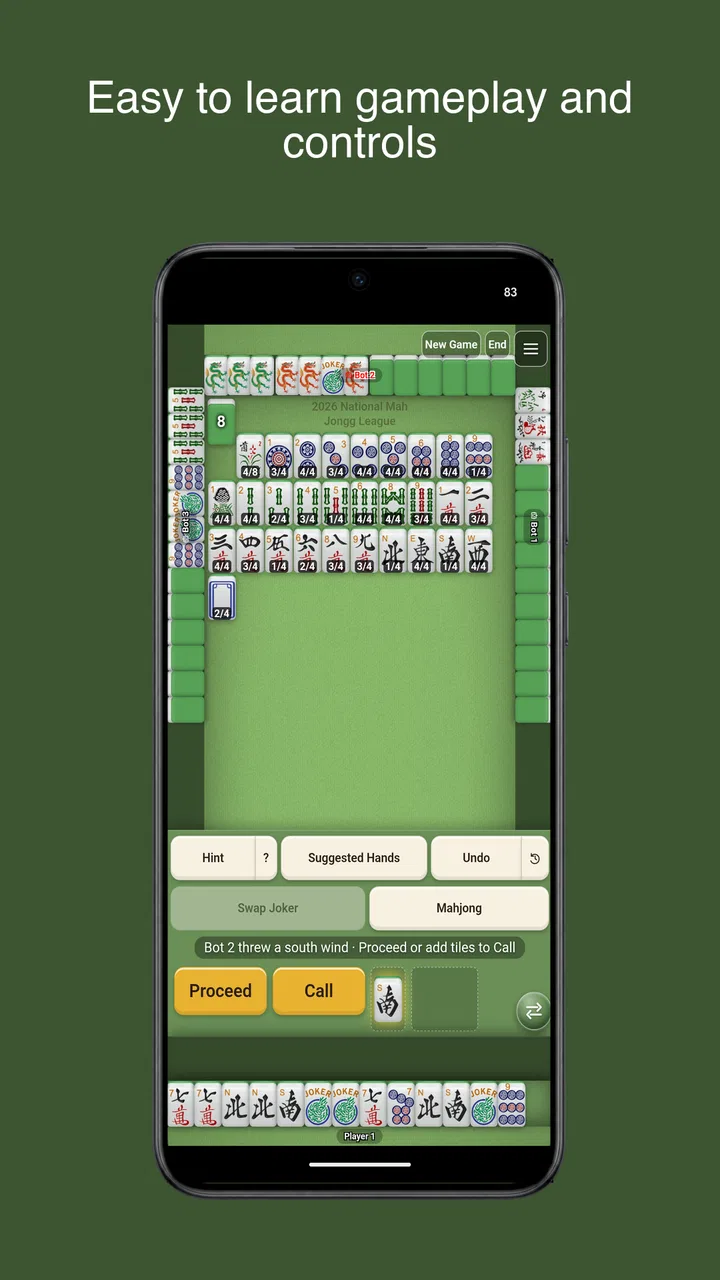
I enjoy board games most when they give me a reason to come back with the same people, and that is the space Mahjong 4 Friends: Multiplayer tries to occupy. It is a free board game from Unwind Media built around American and Chinese Mahjong, with the option to play with friends or against AI. That combination makes it more interesting than a simple solo puzzle, because the app is really about arranging a proper table experience on a phone or tablet.
My overall impression is positive, especially if you already know one of the Mahjong rule sets or have patient friends willing to learn together. The game has a strong community signal, with a 4.8 average from around 1.5 thousand ratings and more than 100 thousand installs. Those figures suggest that the focused idea works for many players. Still, I would not recommend downloading it blindly to someone expecting a fast, highly guided casual game. Mahjong has a learning curve, and the difference between American and Chinese play matters.
How the two Mahjong styles shape the experience
The most important decision here is not whether you like tile games in general. It is whether you want to play American Mahjong, Chinese Mahjong, or both. They share the familiar tile vocabulary, but they do not feel identical at the table. A player who learned one version may recognize the pieces immediately and still need time to understand the other version’s priorities.
You May Also Like

 Blood Strike: 2.5 Anniversary
Blood Strike’s Loadouts Turn Every Drop Into a Tactical Gamble
A close look at Blood Strike’s custom loadouts: how fast access to signature weapons reshapes its battle royale rhythm, rewards preparation, and narrows the gap between fights.

 Pandora - Music & Podcasts
Pandora’s Music Is Easy to Start, but Harder to Recover
Pandora’s strength is its low-effort path from a seed to a station. Its weak spot is how much confidence it asks you to place in connection, setup, and quiet recovery.

 8 Ball Pool
 Is Built on Rivalries, Rematches, and Routine
A close look at the rivalries, rematches, shared routines, and unanswered safety questions that turn a quick pool match into a persistent mobile community.

 Samsung Music
’s Quiet Strength Is Playing What You Already Own
Its reach comes less from spectacle than from dependable access to a personal library. That simplicity is both the app’s strongest retention engine and its ceiling.

 AccuWeather: Weather Radar
AccuWeather Review: A Quick, Clear Forecast for Everyday Decisions
For everyday plans, the best forecast is the one you can understand quickly. AccuWeather makes rain timing, radar, and local conditions easy to act on, with a few trade-offs.

 Hill Climb Racing
Why Hill Climb Racing Still Turns Crashes Into One More Run
A tiny car, a bumpy hill and one more upgrade: Hill Climb Racing keeps resurfacing because its simple chaos makes every near-miss feel personal.
More From Our News Desk
View All News


That is why I see this app less as a generic matching game and more as a digital meeting place for people who already have an interest in Mahjong. The store summary presents multiplayer play with friends or AI, and that is a useful distinction. You can use the computer as a way to practice the flow, then move to a group game when everyone is ready. For a household where nobody owns a physical set, the app can remove the need to buy, organize, and store a large collection of tiles.
At the same time, the app is not automatically the best starting point for a complete beginner. Mahjong terminology, hand recognition, discards, and table etiquette can be confusing when you are learning from a small screen. I would approach it with a short shared lesson before beginning a serious game. One person can explain the goal while the others use the AI option to become comfortable with the board and the rhythm of turns.
The dual-rule focus is also its most distinctive strength. Many mobile board games simplify a traditional game until it becomes a quick imitation. This one is more appealing to players who want the identity of American or Chinese Mahjong to remain central. The trade-off is that the app asks more from you. If you want a game that can be understood in a minute and finished during a short break, a simple tile-matching title will probably suit you better.
A practical first session
For a realistic everyday use case, imagine four relatives who normally play together during holidays but live in different cities. Instead of trying to explain a physical table through a video call, they can agree on one rule set, open the game, and use the multiplayer format as the shared activity. The person who knows the rules best can guide the first few rounds, while the others focus on recognizing the tiles and following the turn order.
I would not make that first session a high-pressure competition. A better workflow is to play one introductory round, pause to discuss confusing choices, and only then start treating the result seriously. This is one of the less obvious advantages of having AI available: it gives a group a way to rehearse the basic flow without immediately depending on every player being equally experienced.
For solo use, the AI option is valuable but should be viewed as practice rather than a complete replacement for friends. Mahjong is social partly because the decisions become meaningful when other people are watching, reacting, and remembering your habits. A computer opponent can help you learn the interface and think through discards, but it cannot reproduce the atmosphere of a familiar table.
What free means here
The game is free to download and is rated Everyone, which makes it easy to try without asking for an upfront payment. There are in-app purchases priced from $0.99 to $9.99 per item. That is the purchase context I would keep in mind before starting: the entry cost is zero, but the app does offer paid items inside it.
I am deliberately cautious about interpreting those purchases. The available product details identify the price range, but they do not establish that buying anything is necessary to play, nor do they explain whether purchases affect appearance, convenience, access, or competitive ability. I would therefore avoid promising a completely purchase-free experience, while also avoiding the opposite assumption that spending is required.
My practical advice is simple: install it because the core Mahjong idea interests you, not because you expect a particular monetization model. If you are comfortable ignoring optional purchase prompts, the free entry makes experimentation straightforward. If you dislike any in-app spending at all, check the purchase controls on your device before handing the game to a child or a family member who may tap through menus quickly.
That distinction matters more in a multiplayer game than in a solitary one. When friends are involved, players naturally want everyone to have the same opportunities. Until you understand what the paid items do, I would not organize a money-sensitive tournament or assume that every participant has identical access. The fair approach is to agree that nobody spends during the first few sessions and evaluate the game on its basic play.
Progress without turning every round into a test
Mahjong itself creates pressure through decisions rather than through a conventional level ladder. Every discard can improve your chances or reveal information to the table. That means the game can feel demanding even when there is no need to chase a streak or unlock a reward. I like this kind of pressure because it comes from the board, not from an artificial countdown.
For new players, however, the same quality can feel unforgiving. A beginner may not know whether a poor result came from a bad decision, unfamiliar rules, or simple luck. I recommend treating the first several games as observation sessions. Notice which tiles you keep too long, which combinations you abandon too late, and whether you are trying to build a hand that does not fit the chosen rule set.
This is where the American and Chinese options require different thinking. Switching between them can be educational, but it can also create avoidable confusion if you change rules before understanding the first one. I would learn one format well, write down the terms that keep causing trouble, and only then explore the other. That approach makes the app feel like a useful practice tool instead of a stream of unexplained losses.
There is also a social form of progress. A group becomes better at reading each other’s habits, remembering common mistakes, and discussing why a discard was sensible. In my view, that is more rewarding than a purely personal progression system because it gives repeated matches a shared history. The downside is that a group with one expert and several beginners may become unbalanced, especially if the expert explains too little or plays too quickly.
To reduce that gap, I would rotate the role of teacher. Let each player explain one decision after a round, even if the explanation is imperfect. This keeps the session from becoming a lecture and helps everyone understand that Mahjong is not only about memorizing patterns. It is also about adapting to the tiles that appear and to the information revealed by other players.
Fairness when friends and AI share the table
The app’s central fairness question is whether everyone is competing under the same rules and access conditions. The multiplayer concept is attractive because it lets friends share a game remotely or locally through the app’s intended play format, while AI gives individuals a way to participate without assembling a full group. But the quality of a match depends heavily on agreeing on the rule set before the first turn.
I would make that agreement explicit. Say whether the table is playing American or Chinese Mahjong, decide how seriously the result will be treated, and give newcomers permission to ask questions. This is not unnecessary ceremony. A player can make a move that looks strange under one tradition and reasonable under another, so silent assumptions can create arguments that have nothing to do with the actual quality of the game.
Spending is another fairness consideration. Since the app contains individual purchases between $0.99 and $9.99, I would keep paid items outside the definition of skill unless the group has first confirmed what they change. The safest competitive standard is to judge players on their decisions at the table, not on who has tapped a purchase button. If a paid item turns out to affect access or play, friends should either use the same arrangement or leave it out of serious competition.
I also prefer the AI as a neutral practice partner rather than as evidence that a player is ready for a tournament-style match. Human opponents notice patterns, bluff through discards, and create a different emotional rhythm. A computer can be useful for repetition, but a strong solo result does not necessarily translate into a strong multiplayer performance. That is a normal limitation of moving from a predictable practice setting to a social one.
For families, the Everyone age rating is reassuring as a broad content classification. Even so, I would still supervise younger players around purchases and explain that a game result is not a reason to spend money. The age label describes content suitability; it does not answer every question about how a child will respond to competition or purchase prompts.
The friction points I would consider first
The first likely obstacle is learning. Mahjong is not difficult because the controls are inherently complicated; it is difficult because the rules and strategic vocabulary take time to settle in your head. A polished interface can show the tiles, but it cannot instantly give a beginner the instincts of an experienced player. If you want immediate confidence, this may feel slower than expected.
The second obstacle is the small-screen compromise. Digital tiles are convenient, especially when a physical set is unavailable, but they do not provide the same tactile separation as real tiles. On a phone, I would expect to spend more attention checking the board and less time casually glancing at the table. A larger screen should be more comfortable for group sessions, particularly when several people are discussing a hand.
The third is uncertainty around the role of purchases. The price range is clear, but the available product information does not explain the function of each item. I would not label the game unfair on that basis, because there is no verified reason to do so. I would simply treat the purchase system as something to inspect before investing time in competitive play. That is a sensible habit for any free game with optional paid items.
Another limitation is audience fit. This is not the right choice for someone who wants a quick puzzle that can be played silently with no preparation. It is also not ideal for a player who insists on one specific Mahjong tradition while the rest of the group prefers another. In that situation, a dedicated app centered on the preferred rule set may offer a cleaner learning path, even if it lacks this game’s broader American-and-Chinese focus.
How it compares with physical sets and simpler alternatives
Compared with a physical Mahjong set, the app is easier to start and easier to use with friends who are far away. You do not need a table large enough for tiles, and nobody has to remember how to set up the pieces. The physical version still wins for atmosphere, tactile feedback, and the relaxed conversation that happens between turns. I see the app as a practical substitute when distance or space gets in the way, not a total replacement for the real table.
Compared with tile-matching games, it offers much more depth and social decision-making. A matching game is usually better for a short, low-commitment break because its objective is immediately visible. This title is better when you want a traditional board-game session with consequences attached to each choice. The exchange is convenience for complexity: the more authentic the decision-making feels, the more time you need to understand it.
Compared with a generic online board-game platform, its specialization is a benefit. You are not searching through dozens of unrelated games; the whole experience is directed toward Mahjong. That focus can make it easier to gather the right group, but it also means the app has less value if your friends are not interested in Mahjong specifically. A broader platform is the better choice for a mixed group that wants to switch between chess, cards, word games, and other formats.
Developer Unwind Media has positioned the game around a clear niche rather than trying to make it everything at once. The strong average rating and growing install base make it reasonable to give that niche a try, while the several hundred written reviews indicate that players have had enough experience to discuss it beyond a first impression. I would still make my decision based on the rule sets and multiplayer need, not on popularity alone.
Who should install it, and who should pass
I would recommend it to a Mahjong learner who wants both American and Chinese options, a group of friends looking for a recurring board-game activity, or an experienced player who needs a digital table when a physical set is impractical. It is especially appealing if at least one person in the group can explain the basics and everyone is willing to play a few low-pressure rounds first.
I would also recommend it to people who prefer games where improvement comes from better decisions rather than constant unlocking. The satisfaction here is likely to come from recognizing a stronger hand, making a more disciplined discard, and understanding why a round changed direction. That kind of progress is quiet but meaningful, and it suits players who enjoy studying a game over time.
I would skip it if your priority is instant entertainment, a completely explained tutorial experience, or a game with no purchase considerations at all. I would also look elsewhere if you need a particular regional rules tradition presented with no crossover. The presence of both American and Chinese Mahjong is a strength for curious groups, but it can be a complication for someone who wants one tightly defined format.
My trust verdict after weighing the trade-offs
Mahjong 4 Friends: Multiplayer earns my recommendation as a focused, free-to-try board game rather than as a universal Mahjong solution. Its best feature is the chance to bring American and Chinese Mahjong into a digital multiplayer setting while keeping AI available for solo practice. That is a useful combination for households, remote friends, and learners who do not own a physical set.
I would begin with one rule set, use the AI to understand the turn flow, and keep the first multiplayer games friendly rather than competitive. I would also review the in-app purchase controls before letting younger players use it and would not assume that spending is either necessary or irrelevant until the paid items are understood. My main fairness advice is to agree on rules and spending expectations before the table begins.
The game is not frictionless, and its learning curve is part of the package. Yet that is also why it can hold attention beyond a few quick rounds. If you want a real Mahjong-style session with friends or a way to practice when nobody else is available, this is a sensible download. If you want a fast matching puzzle or a single-rule specialist app, another option will probably feel more direct.
For me, the final judgment is straightforward: this is a promising choice for players who value the social structure of Mahjong and are comfortable learning through play. The free entry makes trying it easy, the Everyone rating broadens its household appeal, and the purchase range deserves ordinary caution rather than alarm. I would invite friends, choose the rules carefully, and give it several relaxed sessions before deciding whether it belongs in our regular game rotation.
FAQs for Mahjong 4 Friends: Multiplayer
01What is Mahjong 4 Friends: Multiplayer?
Mahjong 4 Friends: Multiplayer is a digital version of the classic Mahjong game, designed for both Android and iOS devices. It allows players to connect with friends and enjoy multiplayer matches. The app offers various layouts and levels of difficulty, making it ideal for both beginners and seasoned Mahjong enthusiasts.
02How do I start a multiplayer game with friends?
To start a multiplayer game in Mahjong 4 Friends, you need to create an account or log in using your social media profile. Once logged in, you can invite friends to join a game by sending them a direct invitation through the app. You can either create a private room or join an existing one to play together.
03Are there any in-app purchases, and are they necessary?
Mahjong 4 Friends: Multiplayer offers in-app purchases that enhance the gaming experience. These may include additional board designs, hints, and power-ups. While these purchases can make the game more enjoyable, they are not necessary to play. The core game remains free, allowing players to enjoy matches without spending money.
04Does the app require a constant internet connection?
Yes, Mahjong 4 Friends: Multiplayer requires a stable internet connection to play multiplayer games. This ensures smooth gameplay and allows you to connect seamlessly with friends. However, if you prefer to play solo, there might be offline modes available, depending on the app's features and updates.
05Can I customize the appearance of the game board and tiles?
Yes, customization is one of the features of Mahjong 4 Friends: Multiplayer. Users can choose from a variety of board designs and tile sets to personalize their gaming experience. Some customization options may be available for free, while others might require in-app purchases. This allows for a unique and tailored gameplay experience.
Pros
- Easy-to-use interface for quick setup.
- Real-time multiplayer enhances social play.
- Customizable game rules for flexibility.
- Cross-platform support for Android and iOS.
- Regular updates with new features.
Cons
- Limited offline play options available.
- Occasional connectivity issues reported.
- In-app purchases can be costly.
- Ads may interrupt gameplay experience.
- Lacks a single-player campaign mode.

Mahjong 4 Friends: Multiplayer
Gallery